
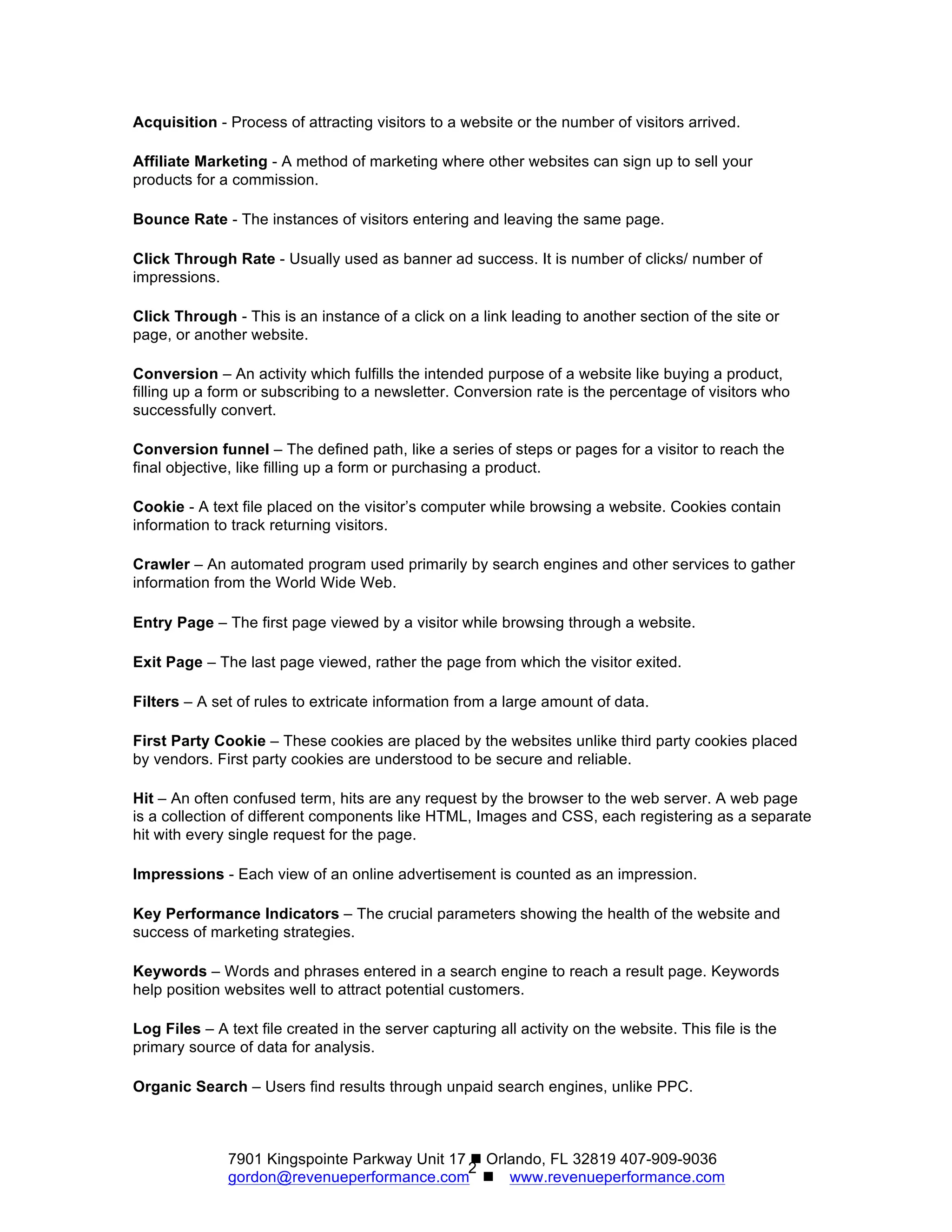
A Comprehensive Web Analytics Glossary
The world of web analytics is rich with terminology that can often confuse newcomers and even experienced practitioners alike. Understanding these terms is pivotal for making informed decisions in digital marketing and web development. This glossary aims to elucidate common web analytics terms and concepts, helping you navigate the intricacies of this critical domain. For a deeper dive into various analytics terms, you can refer to web analytics glossary https://accs-net.com/glossary/.
1. Web Analytics
Web analytics is the measurement, collection, analysis, and reporting of web data to understand and optimize web usage. It provides insights about user behavior, content performance, and marketing effectiveness.
2. Attribution
Attribution refers to the process of determining which marketing channel or campaign contributed to a conversion. Different models exist, such as last-click, first-click, and multi-touch attribution.
3. Bounce Rate
Bounce rate is the percentage of visitors who navigate away from the site after viewing only a single page. A high bounce rate may indicate that the landing pages are not relevant to the visitor’s interests.
4. Conversion Rate
Conversion rate is the percentage of visitors who complete a desired action on the site, such as making a purchase or signing up for a newsletter. It is calculated by dividing the number of conversions by the total number of visitors.
5. Cookies
Cookies are small pieces of data stored on a user’s computer by the web browser while browsing a website. They are used to remember user preferences, logins, and other information that can enhance the user experience.
6. Click-Through Rate (CTR)
CTR is a metric used to assess the effectiveness of an online advertising campaign. It measures the number of clicks on an ad divided by the number of impressions, expressed as a percentage.
7. Session
A session is a period of interaction between a user and a website, typically encompassing multiple page views, interactions, and events. A session ends after 30 minutes of inactivity by default.
8. Unique Visitors
Unique visitors represent the number of distinct individuals who visit a site during a specific period. This metric helps website owners understand their reach and audience size.
9. Funnel Analysis
Funnel analysis is a method used to track the steps users take toward completing a conversion. By analyzing the conversion funnel, businesses can identify drop-off points and optimize the user journey.
10. KPI (Key Performance Indicator)
KPI is a measurable value that demonstrates how effectively a company is achieving key business objectives. In web analytics, common KPIs include conversion rate, bounce rate, and average session duration.
11. Pageview
A pageview is counted each time a user loads a page on a site. This metric is essential for gauging content engagement and overall site traffic.
12. Exit Rate
Exit rate is the percentage of visitors who leave a website from a particular page after viewing that page. It is a useful metric for identifying pages that may require optimization.

13. Segmentation
Segmentation is the process of dividing website visitors into groups based on specific criteria, such as demographics, behavior, or traffic sources. This helps in analyzing performance more precisely.
14. A/B Testing
A/B testing, or split testing, involves comparing two versions of a web page to determine which one performs better in terms of conversion rates and user engagement.
15. User Experience (UX)
User experience refers to the overall satisfaction and interaction a user has with a website. A positive UX can lead to higher engagement and conversion rates.
16. Heatmaps
Heatmaps are visual representations of data that show where users click, scroll, or hover the most on a webpage. This information can guide design and content improvements.
17. Latency
Latency refers to the delay before a transfer of data begins following an action. High latency can negatively impact user experience, causing frustration and potential drop-offs.
18. Real-Time Analytics
Real-time analytics enables businesses to monitor user interactions as they happen, providing immediate insights into online activities and campaign performance.
19. Tag Management
Tag management is the process of managing and deploying marketing and analytics tags (snippets of code) on a website without the need for manual code updates, simplifying the analytics implementation process.
20. Social Media Analytics
Social media analytics refers to the assessment of social media data to understand social interactions and user behavior on different platforms. It helps businesses gauge their presence and engagement level on social media.
Conclusion
Understanding web analytics is crucial for anyone involved in online marketing and website management. By familiarizing yourself with these terms, you can better interpret data and make informed decisions that enhance your digital strategy. This glossary serves as a foundational tool to aid your journey into the world of web analytics, enabling you to leverage data effectively for business growth.